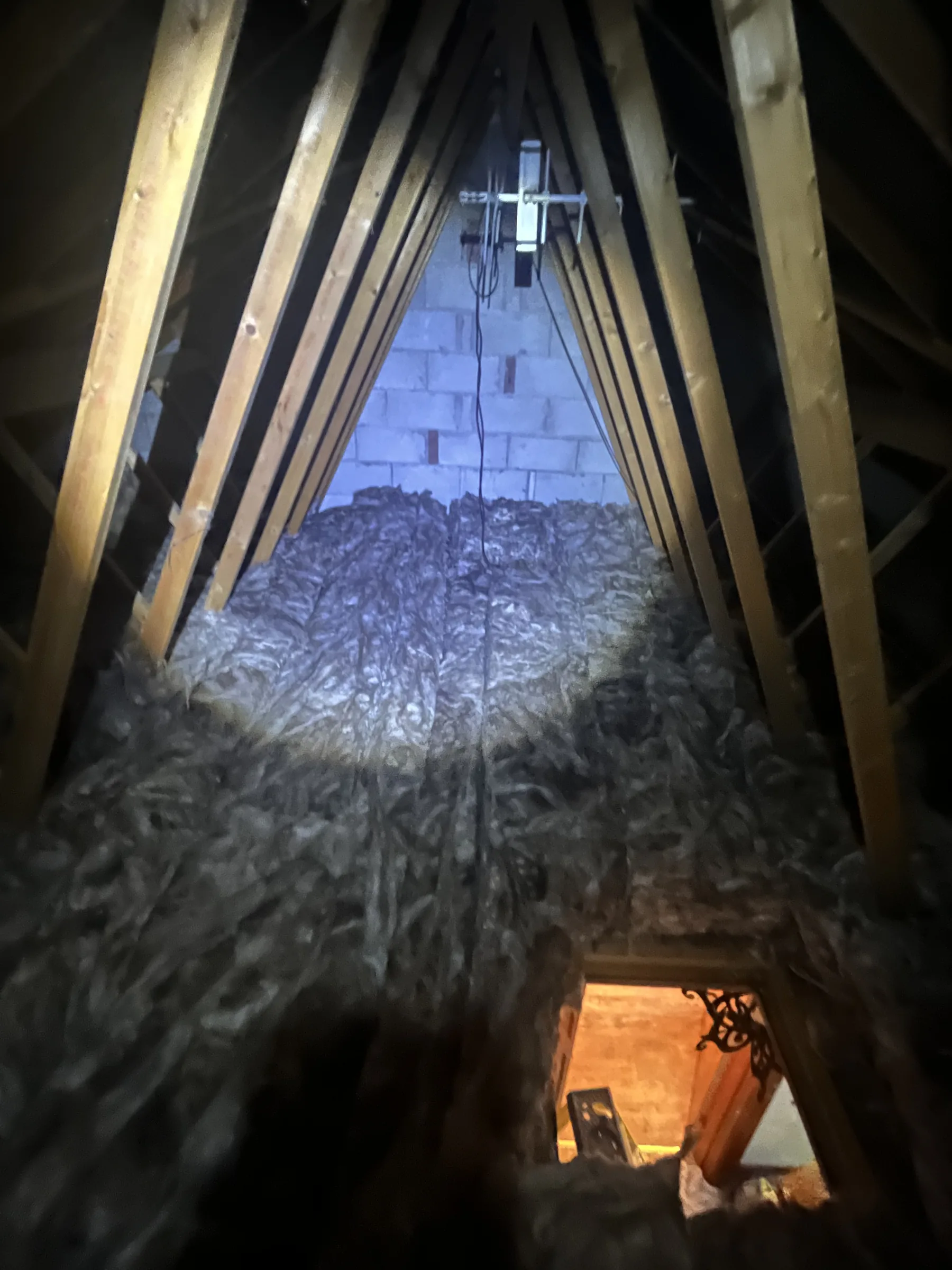
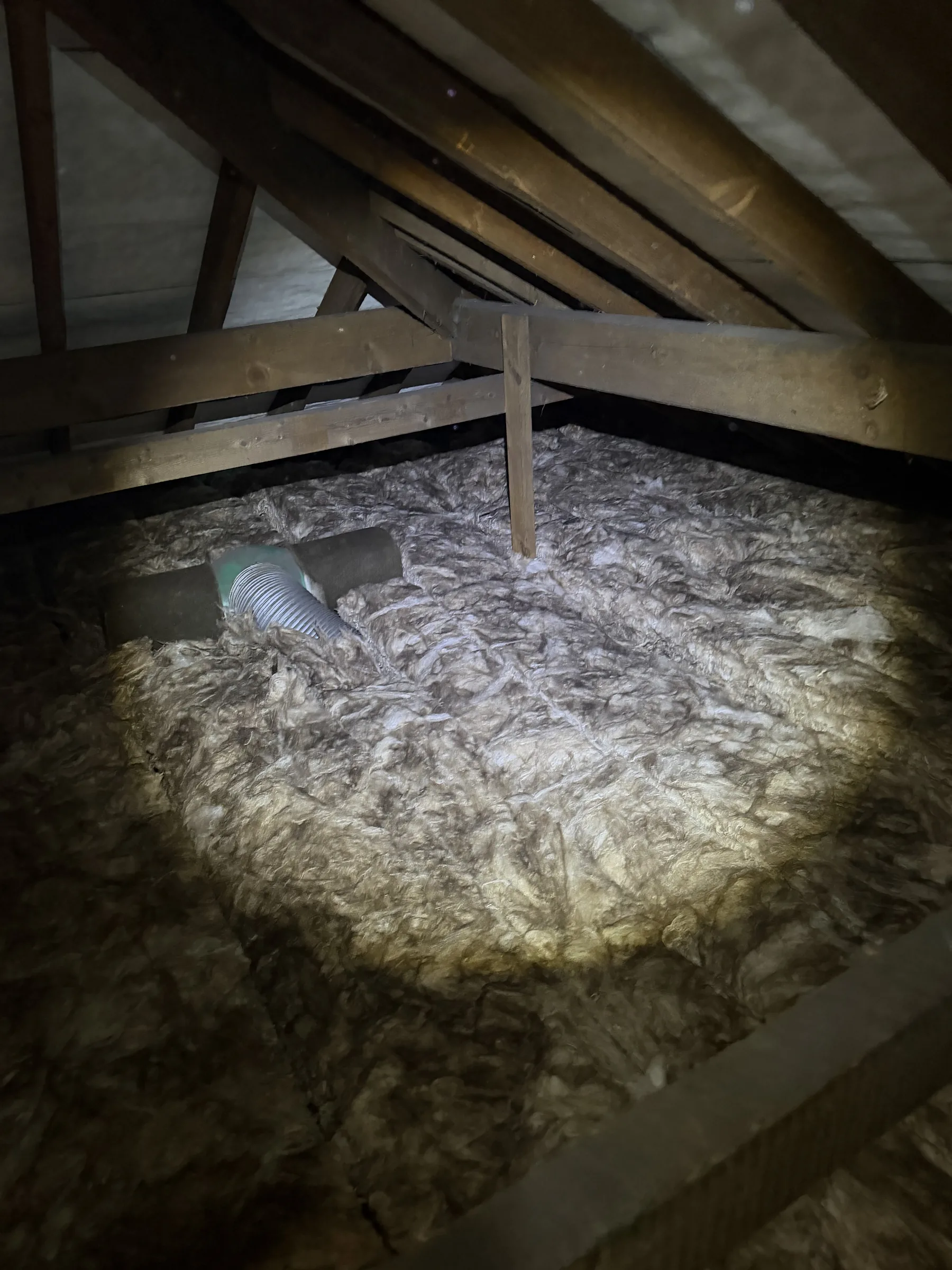
Depth is the single variable that matters most in a loft insulation job, and it's the one most homeowners never ask about. The material costs a few pounds a square metre. Getting the depth right is what turns a loft from "insulated on paper" into one that actually holds heat through a Cumbrian winter.
This article walks through what the current standard is, why 300mm has quietly become the preferred default, and what to check on your quote before you commit to any installer.
Why Depth Matters
Loft insulation works by trapping air inside fibres. The more trapped air between the warm room below and the cold roof above, the harder it is for heat to escape. Depth is a direct multiplier on that effect.
- 50mm of original 1970s insulation gives roughly a U-value of 0.50 W/m²K. Most of the heat from your living room goes straight out through the roof.
- 150mm of older top-up gets you to around 0.24 W/m²K. Better, but still losing noticeable heat.
- 270mm of modern mineral wool reaches the current regulation target of roughly 0.13 W/m²K, about the point where additional depth stops giving strong returns.
- 300mm or more edges the number lower still and gives you a useful safety margin against settlement over the following decade.
Part L and the 270mm Rule
The Building Regulations that apply to lofts in England, Wales, and Scotland are collectively known as Part L (for "conservation of fuel and power"). Current guidance sits around a U-value of 0.16 W/m²K for existing dwellings, which translates to roughly 270mm of mineral wool for the typical product.
Loft insulation installed as a straightforward upgrade is exempt from formal Building Regs approval, but if you ever come to sell the house or apply for an EPC improvement, the installer's quote and invoice showing 270mm mineral wool is the paper trail you want.
Why 300mm Has Become a Sensible Default
Walk onto a job from any quality installer today and they'll default to 300mm rather than 270mm. There are three reasons for that.
- Headroom for settlement: mineral wool settles by 5-10% in the first couple of years under its own weight. Starting at 300mm means you're still above 270mm in year three.
- Marginal material cost: the difference between 270mm and 300mm of mineral wool is a thin extra layer. On a typical 40-square-metre loft that's roughly £20-£30 in materials.
- Future-proofing: every revision of Part L since 1985 has nudged the target depth upwards. Installing at 300mm now means you're unlikely to need to revisit it if the rules tighten again.
Unsure what's actually in your loft?
714 Insulation measures depth on every free survey across Cumbria and the Lake District. Call 07899 988437 and we'll tell you exactly where you stand.
Book a Free SurveySettlement Over Time
Most installers don't explain settlement well. Mineral wool doesn't stay at its installed depth forever. Gravity, repeated foot traffic along boarded walkways, and occasional compression from stored items all pull it lower.
A professionally laid 300mm install typically holds between 270 and 290mm a decade later if the loft is used as storage, or closer to 290mm if it's left alone. That's still inside regulation. A 270mm install on day one often drops to 240mm over the same period, which starts nibbling at your heating performance.
The one thing not to do: stand on or compress the insulation to fit more stuff up there. Once fibre structure is crushed, the thermal value doesn't recover. Either lay raised boards on proper joist-span crawl supports, or accept that a storage loft and an insulated loft pull in different directions.
What to Check on a Quote Before You Book
Before you sign off on any installer's price, check the quote answers these four questions clearly.
- What depth, specifically? The word "topped up" is meaningless. The quote should say 270mm or 300mm final combined depth.
- What product, and what brand? "Mineral wool" is a category. The quote should specify the brand and roll thickness so you can verify it on the day.
- Is eaves ventilation included? Good installers leave a clear air path at the eaves using baffles or clearance. Cheap installers stuff the fibre right into the edge, which causes damp.
- Is there a workmanship guarantee? The product itself carries a manufacturer guarantee. Separately, the installer should stand behind how it was laid, for at least a year.
If any of those four are absent from a quote, ask. A good installer will clarify in writing on the same day. A weaker installer will hedge, which is your signal to keep looking.
Frequently Asked Questions
Close. 270mm is about 10.6 inches and 300mm is about 11.8 inches. If you're measuring with an inch ruler from the 1970s loft, aim for 11 inches of loose mineral wool minimum.
Not directly; the boards would crush the fibre and destroy the thermal value underneath. What you can do is fit raised joist-span supports (Loft Legs and equivalent) that sit above the insulation and let you board a walkway or storage area without compressing anything.
Both are types of mineral wool: glass wool is spun from recycled glass, rock wool from volcanic rock. Thermal performance is similar; rock wool is slightly denser and slightly more fire-resistant. Either works well for loft use.
For standard cold-loft insulation (where the insulation sits between and over the ceiling joists, with a cold unheated loft above), a separate vapour barrier isn't needed. Modern mineral wool already incorporates adequate moisture handling in combination with normal ceiling plasterboard.
For most Cumbrian properties going from effectively no insulation to 300mm, the payback on heating-bill savings lands between two and four winters. If you're going from 150mm to 300mm, expect closer to five or six winters. Either way, it's one of the fastest-paying home improvements available.